Kitty Wins the Vote

“…[a] remarkable feature of the election is the remarkable success of Mrs K. B. Cuthbert. That it is an achievement we do not think there is any dispute. When she entered the list two weeks ago, she was practically unknown, and it would have been a brave man who would have placed her fourth in the poll. But by Friday evening there were few islanders who did not know her, not only by name but in person.”

Canvey Chronicle, 6th April 1939

44-year-old Kitty, now a proprietor of a newsagents, had been living on Canvey Island for five years when she decided to run for the Urban District Council. “Up to the present I have taken the Englishman’s habit of just ‘grousing’”, she explained on her candidate’s handbill. “I now feel I have the time and health to TRY and do something about it.”

Kitty had moved to the island (from Lewisham) during a period of ill-health and unexpectedly gave birth to her second child just a few months afterwards (her pregnancy had been mistaken for gallbladder disease until the very last moment, resulting in an emergency c-section). Five years later, she was finally feeling in good health and ready for a new project. She stated in her handbill: “Public office is not new to me; During the four years of war I held a very responsible position at the Headquarters of the Australian Forces, and for nine years previous to coming to Canvey I held the position of Organising Secretary, Treasurer and Show Manager of a very large concern in London.” (This ‘large concern’ was the Lewisham & District Canine Society of which she’d been a founding member.)

Now, as the Canvey Chronicle put it, she “threw herself into the business of the election with energy and resource and in the short campaign established a strong position for herself.”

“I am of the opinion that a woman’s point of view can only be voiced effectively BY a woman,” she declared. “If YOU feel I possess the necessary abilities to represent you on your Council, I ask for YOUR VOTE AND SUPPORT. IF I am elected and fail to justify your support, YOU will know what to do when I come for re-election.”

Although a regular attendee of the Labour and Progressive League party meetings, she stood as an Independent candidate, as she felt there was a need for councillors who “are not tied to any interests or ‘clique’ and who will fearlessly express their views of the Island’s interests.” The Island population were soon to discover that Kitty was certainly fearless in expressing her view.

On the night before the election, several meetings were held. Kitty and another candidate, William Money, a 37 year old radio and cycles dealer, held their own meeting at the village hall. The chairman, a Mr Martin, opened the meeting by spreading a union jack upon the table, declaring “we are true Britons”.

After their meeting, Kitty and Mr Martin attended the meeting of the Progressive League at the local primary school. The Canvey Chronicle reported, “The hall was packed for the occasion and the speakers were given a good hearing without undue interruption.” That is, until the meeting was coming to a close, when Kitty rose and asked if she could address the meeting.

The chairman, Mr Mace, refused her request, and the meeting was declared closed. “Nothing daunted, Mrs Cuthbert mounted the platform and began to speak, amidst cheers and jeers”. The Charmain, and Labour councillor Mr Pickett “remonstrated with her”, and Kitty left the platform, only to stand on a chair and begin to speak. Mr Martin loyally waved his Union Jack in support. Amidst the noise as the audience filed out around her, her message went unheard, until somebody suggested they take the meeting outside, and “Mrs Cuthbert left the building followed by a crowd of her supporters.”

Despite not being able to take the platform at the Progressive League meeting, her fearlessness clearly made an impression on the voters, as when the results were announced the next day, she had taken fourth place and was one of the six new members of the Council. (There had been twelve candidates in all.) At the local Labour Party meeting the following week, the Chairman said he believed the “eve-of-the-poll meeting had contributed to her success”.

Kitty was present at this meeting, and thanked the Labour Party for their support, though she was “not a member of that body or any other association”. “Her policy was her own,” the Canvey Chronicles reports, “and she would stand by it whether she lost friends or not.”

She also attended the next meeting of the Progressive League, where she was congratulated by their Chairman, who said “she had put up a sterling fight… her achievement was wonderful.” He failed to mention the Progressive League meeting on the eve of the election at which they had denied her the opportunity to speak.

The Canvey Chronicle summarised Kitty’s response:

Mrs Cuthbert said the great pleasure to her was that she was going into the Council perfectly independently. She had got no governor. She got in by the voice of the people. She “popped out of the blue”, let people weigh her up, and had nobody to push her. She thought they would be good colleagues. If she agreed with what the League wanted she would back them up but she had got to agree.

I’m not sure how for long Kitty served as a councillor, but when she died in 1965, her son (my grandfather) Don received a letter from the clerk of the Council expressing their sympathies, acknowledging that she “served this district as a Councillor for many years” before she “retired from public service”.  “There are still a great many residents who will remember with appreciation her active interest in local  affairs and regard her death as a very sad loss to our community,” the clerk wrote. Interestingly, he also includes that “our present Chairman [Councillor G. A. Pickett] is one of the few Councillors left who was a contemporary of your Mother […] and he is particularly upset by the sad news”. This is the same Councillor Pickett who remonstrated Kitty when she took the platform at the eve-of-the-poll meeting in 1939, but presumably during the time they served together on the Council she was able to gain his respect.

I was lucky enough to find this letter from the Council amongst my grandad’s papers. I went to the Essex Record Office to see if I could discover anything more and was thrilled to find her original candidate’s handbill and a copy of the Canvey Chronicle from 6th April 1939 covering the election. I’ve quoted from both of these sources throughout this blog post. The newspaper also contained the below photo and caption which I ordered as a digital image from the Record Office.
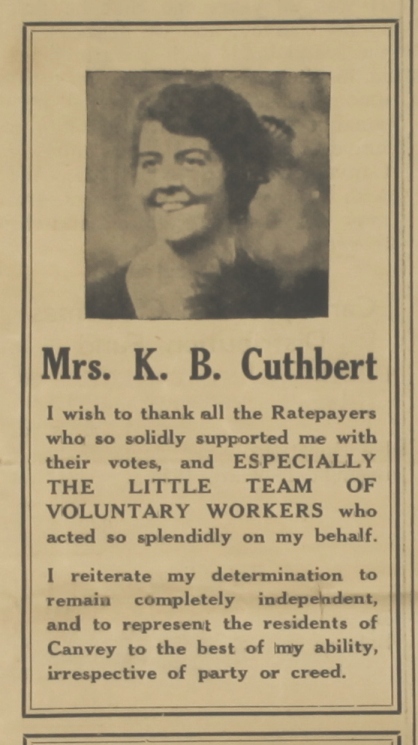
Reproduced by courtesy of the Essex Record Office D/UCi 1/4/2

Canvey Chronicle, 6th April 1939.
Reproduced by kind courtesy of the Essex Record Office D/UCi 1/4/2
Kitty’s First Stand

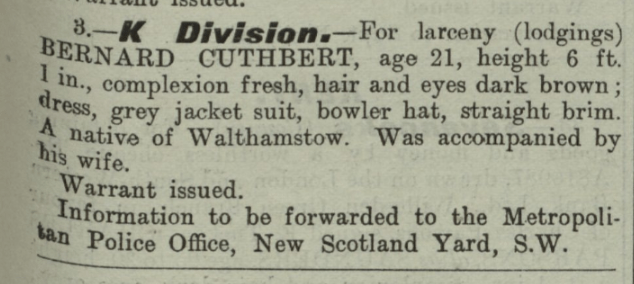
In September 1911, the following appeared under ‘Apprehensions Sought’ in the Police Gazette:

From the Police Gazette
From the Police Gazette 29th September 1911; accessed via FindMyPast

My great-grandfather Bernard Cuthbert was actually just 20 years old at the time. He had never been in trouble with the law before and came from a reputable family – his late grandfather had been the police superintendent of Braintree. 

The story is explained in an article that appeared in the Essex Times two weeks later. Bernard had been accused of stealing “a quantity of furniture, valued at £60”, from his former friend and landlord, Harold Wilson Walker. A 50-year-old travelling coal agent, Walker had been born in East London to parents from Derbyshire. He was married with three children, although he and his wife had been living separately for the last ten years. 

Walker was called upon first to explain his case. He said he had been on “friendly terms” with Bernard for “some time”. Three years ago, Bernard had introduced him to his fiancée, Kate (known as Kitty), and “after a time”, suggested there were “certain circumstances” that required them to marry, and asked Walker if he could help her obtain employment. The defence asked Walker to elaborate on these “certain circumstances”.

“Well, they were in dire straits; she was out of employment and in lodgings”, Walker said.

The defence pushed for further clarification: “Don’t let any misunderstandings occur. Were the “circumstances” anything to do with the girl’s condition?”.

“There was some suggestion of the sort,” said Walker. “They both admitted it.”

Walker was clearly implying that Kitty was pregnant when she married, however their first child was not born until the following year, eleven months after the marriage took place. It’s possible that Kitty had a miscarriage or wrongly believed herself to be pregnant, but the defence insisted there was “not the slightest truth” in Walker’s suggestion.

The defence asked Walker: “would it surprise you to know that Mrs Cuthbert is not yet 17, and she was not 14 when you were introduced to her?”. Walker replied that he was indeed surprised, and also to find out that Bernard was in fact not yet 20. 

In January 1910, when Bernard asked Walker for his help obtaining employment for Kitty, her family were experiencing a difficult time. Her father had been a soldier for many years but in 1906 was finally discharged due to his struggle with alcoholism. The family were forced to return from Scotland, where he had been a sergeant instructor with the militia, to Southend-on-Sea where Kitty’s mother’s family lived. (Bernard, although born in Walthamstow, had moved with his family to Southend a few years previously.) When Kitty’s father left them in 1909, her mother was increasingly reliant on her parents to support her and the children. But in February 1910, Kitty’s maternal grandfather died, aged 73. In desperation, Kitty’s mother went to court to request her absent husband provide financial support to her and their two young sons. Under the Summary Jurisdiction (Married Women) Act of 1895, a wife might obtain a court order if she could prove her husband’s “wilful neglect to provide reasonable maintenance for the wife or her infant children whom he was legally liable to maintain”. The Act specifically referred to infant children; at fourteen, Kitty would have not been considered a financial dependant, and in court was described as earning her own living. While her mother was successful in her claim, the court order was made for the maintenance of only two children – Kitty’s young brothers, aged two and four. 

I suspect that her family’s situation is the ‘certain circumstances’ that led Kitty and Bernard to feel that they needed to marry as soon as possible, and reduce the financial burden on her mother. Her young age would have been a factor too – as a fifteen year old girl living in lodgings, away from home, she would have been in a vulnerable position. Bernard would have been keen to marry her as soon as possible so that he could take care of her, but at only twenty himself, working as a paper hanger, he was not in a position to offer her a secure and comfortable home. This was the situation with which Walker offered to assist. 

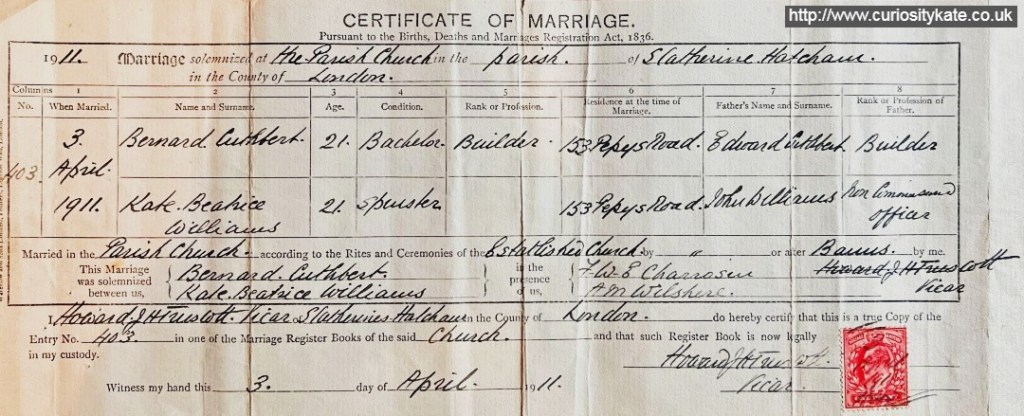
Marriage certificate for Bernard Cuthbert and Kate Beatrice Williams
Marriage certificate of Bernard Cuthbert and Kate Beatrice Williams, from family collection

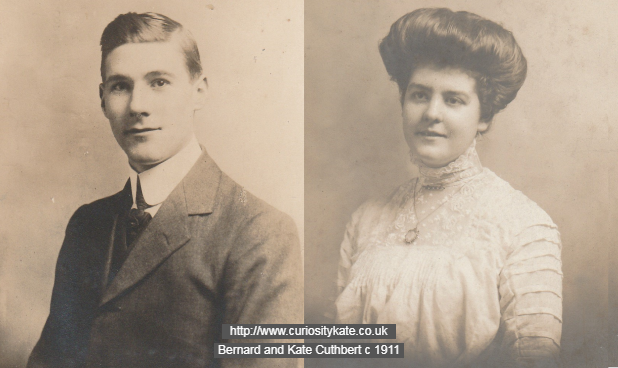
On the 3rd of April, 1911, Bernard and Kitty were married at St Katherine’s, Hatcham. They both gave their ages as 21 (the age at which one could marry without parental consent), although he had only just turned 20 and she was just sixteen. Bernard described himself as a builder like his father, though the court referred to him as simply a paper hanger. Kitty, perhaps out of pride or a sense of loyalty, stated her father’s occupation as ‘non-comissioned officer’ though it had been six years since his discharge and he had more recently been employed as an engine fitter. Bernard and Kitty gave their address as 153 Pepys Road, a boarding house down the road from the church, although neither appear on the 1911 census return which had coincidentally take place the previous night. The witnesses were Annie Margaret Wilshere, a lodger at the boarding house, and Frederick Charrosin, who worked at the post office but was an organist and choir member at the church. 

Continuing his statement, Walker explained that “after the ceremony”, they all went to live at the house he owned at 17 Forest Drive, Manor Park. The Cuthberts were to have the “run of the premises and the exclusive use of a bedroom”, at the cost of 10s a week rent. Not only that, but Walker employed Kitty as a housekeeper, paying her 2s 6d a day in return for breakfast and supper. This meant that Bernard and Kitty were effectively living there rent free and receiving 7s and 6d a week as payment for Kitty’s housekeeping duties. It must have seemed an ideal situation for the young couple, who could now live together in security and comfort. Manor Park was technically part of the county of Essex, but was already effectively a suburb of London, popular with aspiring middle class commuters.

Walker claimed that he purchased a ‘quantity of furniture’ for the house, to be used by all three residents. He said after a “dispute”, he returned home on the 13th of September to find Bernard and Kitty missing, along with most of the furniture. The following morning he received a postcard from Bernard, explaining he and Kitty had left with the furniture, and that they were now living at 149 Grange Road, Bermondsey. This was the basis of his claim that Bernard had stolen his furniture.

The defence now presented their case. Mr Stern, the defence lawyer, suggested that Mr Walker was making false accusations to take revenge on the couple, after he had made “overtures” towards Kitty and been rejected. “It was inconceivable that [Bernard Cuthbert] could have any felonious intent to removing the furniture, considering he wrote to the prosecutor the same night telling him where he and the furniture could be found”, he reasoned. 

Studio photo portraits of Bernard and Kate Cuthbert c 1911

Kitty then took the stand, to explain the truth of their situation. She confirmed that she was sixteen years of age (and would turn seventeen that month), and that she had married Bernard on the 3rd of April, six months previously. She claimed that Walker had suggested that she and Bernard get married, after agreeing to lend them £20 with which to buy furniture. Two months after they moved in with Walker, he asked her if she would go to America with him, and “was very funny” after she refused. “Other scenes took place”, which she either did not describe or the reporter chose not to include, and finally, she told Walker “you have only got me here to ruin my life and when I think how near you have dragged me to the brink of destruction, I hate you”. This is what had led them to finally leave the house, taking their furniture with them. She confirmed that all the furniture they had taken, was now in their home in Bermondsey, and they “had not disposed of a single article”. 

The chairman was either completely convinced by Kitty’s evidence, or he had already made up his mind, as “at the conclusion of Mrs Cuthbert’s evidence, the chairman said the bench were satisfied no jury would convict prisoner and he was therefore discharged”.

It was a bold and courageous testimony from a girl not quite seventeen (and, perhaps unbeknownst to anyone but herself and Bernard, four months pregnant) standing up in court to defend her husband and challenge her harasser, at a time when women frequently had no voice. This was history’s first glimpse of the confident figure she would become. Just four years later, she was working at the headquarters of the Australian Imperial Force, in a role that required “considerable tact and diplomacy”. In 1921 she was in court again, this time standing up for Bernard’s sister Nell, accusing her brother-in-law of being a “scoundrel”, who had “treated [his] wife so disgracefully”.  In 1939 she ran for the Canvey Island Urban District Council, declaring “I am of the opinion that a woman’s point of view can only be voiced effectively BY a woman” – and won. 

As for Bernard, he was never again in trouble with the law, as far as I can tell.

Leonard & Eva

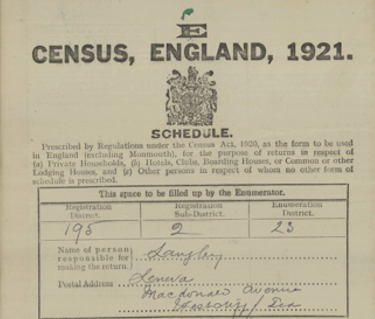
Like many people, I was eagerly awaiting the release of the 1921 Census of England and Wales in January. I purchased several census images that first day but it was a few days later before I realised something rather sweet on one of them. Not particularly important in the grand scheme of things, but something of sentimental interest. My great-grandfather Leonard Langley, known as Len, was living with his first wife Eva in 1921, as I knew, but flipping over to the reverse of their census page I discovered that they named their house ‘Leneva’. This is, of course, a portmanteau of both their names.

Before the 18th century, all houses had names rather than numbers. In close-knit communities, everyone knew everyone else and where they lived. As urban districts and populations grew, and the postal service became established, there became a need to organise houses in a way that could be easily identified. In 1855 the Metropolitan Management Act was introduced, with a new Board of Works given the responsibility of regulating the naming and numbering of streets and houses. Over the course of the next fifty or so years, streets were gradually structured into a simplified numbering system. Another branch of my Southend ancestors, the Lewis family, had lived for twenty years at the address of 3 Grace Cottages, Milton Street, before their house was officially designated 64 Milton Street in around 1900. Of course, colloquially, many people would continue to use their old house names, but the post office had an easier job when people used the official street numbers. 

By 1921, street-numbering was well-established in towns and cities but many people still liked the charm of having a house with a name, especially one they’d chosen themselves. In the interwar years, there was a huge increase in home ownership. In 1914, 10% of householders owned their own home; by 1939 this had risen to 33%. Low interest rates, rising incomes, increased availability of building society mortgages, the growth of suburbs, all contributed to the growth of the middle class, keen to own their homes. To many of these new home-owners, to name your own home, was to truly make it your own. 

Naming a house after the householder was an established tradition dating from Medieval times, but I think ‘Leneva’ represents something more modern. Leonard and Eva married on the 15th of April 1914, when was 24 and she was 26. Both gave their residence as 17 Riviera Drive, where her parents lived. War was declared less than three months later, and Leonard soon enlisted, serving as a motorcycle dispatch rider in France (I’ve yet to find out which regiment he was with). ‘Leneva’, was probably their first marital home, after he returned. It was located two miles across town from Eva’s family, four miles from Leonard’s, and around the corner from his ironmonger’s business. Rather than naming their house for the surname of the male head of the household as tradition would dictate, Len and Eva chose to name their house after themselves. They had survived war and separation, and were finally beginning to build their lives together, perhaps four or five years into their marriage. 

The Lewis Brothers & the Lodger Franchise

You never really know what you are going to find in the newspaper archives. For some families you’ll find all kinds of little titbits, for others you’ll find nothing. I found two interesting and intriguing articles about the brothers of my great-great-grandmother, that list exactly who was living in their family home during 1902 and 1903. The three brothers were George (aged 34, a postman, and reservist in the Royal Engineers), John Edward “Jack” (aged 31, a carpenter and reservist with the Royal Garrison Artillery), and William (aged 22, a bricklayer). There was also a younger brother, Philip, who was only 14 and was not named in the newspaper articles. Sisters Kate (my great-great-grandmother) and Louisa were married and lived away from home, and the youngest, Mary, 19, was in domestic service locally, and lived at home from time to time.

Here’s the first article:

From the ‘Southend Standard and Essex Weekly Advertiser’ 18 September 1902

GEORGE, JOHN EDWARD AND WILLIAM

“A GOOD ACT BY INADVERTANCE”

Mr. Oglesby objected to the claims of George, John Edward and William Lewis, as old lodgers at a house in Milton Street. He was going to fight this case very strongly indeed. There were these three old lodgers in this house, which contained three bedrooms. There lived in it Mr and Mrs Lewis, three grown-up sons and another son. The rent in this house was 9s per week, rates included, with the exception of water rate. In addition to this, there was a card in the window that there was a bed-sitting room to let. He asked on the face of it how these three gentlemen could occupy separate rooms.

George Lewis, in reply to Mr. Fletcher, said he had a separate bedroom. His mother and father and the youngest boy occupied one room, his brothers another, and himself the third.

The Barrister: Nobody else sleeps in your bedroom?

[George] Not that I’m aware of.

Barrister: You would be aware of it, you sleep there yourself.

As to the letting, Lewis added they put a bed in the front sitting room.

The Revising Barrister: I shall allow all three claims.

Mr Oglesby: We will have our lodgers increased next year.

Mr Lewis asked for expenses.

The Barrister: I will not allow expenses in this case.

Mr Oglesby: If I am not justified in raising this case I don’t know what case I am justified in raising.

In reply to the Barrister, Mr Fletcher said that Mr Oglesby had taken part in one of these claims.

Mr Oglesby: I had no intention of doing so.

The Barrister: A good act done by inadvertence.

This article is a fascinating glimpse into the living arrangements of my ancestors, which although seeming cramped to us in the present, were fairly typical of working-class town-dwelling families of the time. After all, an unmarried man couldn’t be expected to live alone, without a mother or landlady to do his laundry and cooking for him. But why were these living arrangements a legal issue, to be scrutinised in court?

The second, shorter article, from thirteen months later (8th October 1903) gives a clue as to the reason. Mr Oglesby, as could be expected, did not give up on this matter. This time, he issued a subpoena for John Edward Lewis, the second son. (The eldest son, George, was a reservist with the Royal Engineers, which may be the reason for his absence from court and the family home in this instance.)

[John Edward Lewis] said seven people lived in the house – his father, mother, three brothers, himself, and from time to time his sister. There were five rooms in the house, three bedrooms, a sitting room and a kitchen. There was also a “backhouse”. The sitting room was used for “sleeping purposes”; he and his brother slept there. When his brother George went away his sister came and occupied the parlour, and they went into “the little room”. He and his brother each paid their mother 12s a week. He had only missed two weeks during the last year.

The Revising Barrister once again reserved his decision. The defence lawyer, Mr Fletcher, commented “this is one of the difficulties of the lodger franchise”. The Revising Barrister agreed, “It is rotten to the core. One has to do the best one can with it.”

So what was the Lodger Franchise, and why was Mr. Oglesby so relentless about this case?

The Lodger Franchise

In 1895, Mr H.W Paul, the Liberal MP for Edinburgh South, called for a second reading of the Lodger Franchise Bill. At the time, the only lodgers who could register to vote were those whose lodgings were worth £10 a year unfurnished. He proposed that lodgers should really be considered “occupants”, whose landlord simply happened to live in the same house, as opposed to somewhere else, and argued “Surely the fitness of a man to exercise the Franchise could not depend upon the place where his landlord resided.” He claimed that 5/6 of lodgers were currently excluded from the vote by the current franchise: “every working man who happened to be a lodger; in other words, every working man who did not happen to be married”, and concluded “That was a state of things which no one could desire to continue.”

However, despite his proclaimed belief that this bill was “in the interest of both Political parties”, it was immediately objected to by the Tory MP for Harrow, Mr W Ambrose, who said “It was the worst form that could be adopted”, would “embarrass all those who were concerned with elections” and “was nothing less than an impropriety”. The Bill was passed, but continued to be disapproved of by many politicians and those in the legal profession. We saw above that the Revising Barrister in Southend described it as rotten to the core”.

The Lodger Franchise gave voting rights to working men of low income, which threatened the establishment of the upper and middle classes. These two articles about the Lewis brothers demonstrate the reluctance of legal professionals to follow the law that they were nonetheless bound to, and also their struggle to understand how different the living arrangements of the working class were to their own. Mr Oglesby seems to find it unlikely that seven adults could possibly live in one small, five-roomed house, although up and down the country many families were in the same situation, but the root of his disapproval is clearly that all three brothers were exercising their legal right to vote. These two short articles tell us not only the details of my ancestors’ living arrangements but also give a glimpse into the social and political divisions of the late nineteenth and early 20th century. Between 1885 and 1918, a great many changes and reforms were made within the voting franchises, with the result that the total registered electorate of the United Kingdom grew from 5.7 million to just over 21 million in those 23 years.

When we think of the history of the right to vote in this country, we tend to focus on the Suffragettes, but the ruling elite also sought to suppress the rights of the working class. One seamstress, Hannah Mitchell, said she was drawn to the Suffrage Movement by “a unity of purpose… which made social distinction seem of little importance”. The first edition of the women of Votes for Women, declared “the women who are in our ranks know no barriers of class distinction”. Historians and scholars are divided on how true these claims really were – after all, the most prominent and powerful suffragettes were born to wealthy families – but nonetheless it’s clear that the establishment were keen to continue to suppress both women and the working class.

What happened to the Lewis brothers?

No further court cases regarding the number of lodgers in the Lewis household appear in the newspapers, perhaps in part because the number of occupants in the Lewis household was soon to decrease. Sadly, John Edward “Jack” Lewis died only two years later, of tuberculosis. He died at home; his youngest sister Mary (then aged 21) was the informant on the death certificate and present at his death. With six adults and a teenager living in the small five-roomed house, it’s a miracle nobody else in the family died of the disease.

George Lewis married and left the family home the following year in 1906. Mary Lewis married and left in 1909, and then father Edward died in 1910, leaving the house with only three adult occupants: mother Mary, and brothers William and Philip Lewis (who had grown up by then and was working at his father’s former place of employment, the local gas works). By 1911, the Lewis family had a new “lodger” – a young woman called Louisa Haynes, who went on to marry William Lewis two years later. But of course, as a woman, she had no right to vote, so Mr Oglesby could have no legal objection to her, whether he was aware of her or not.

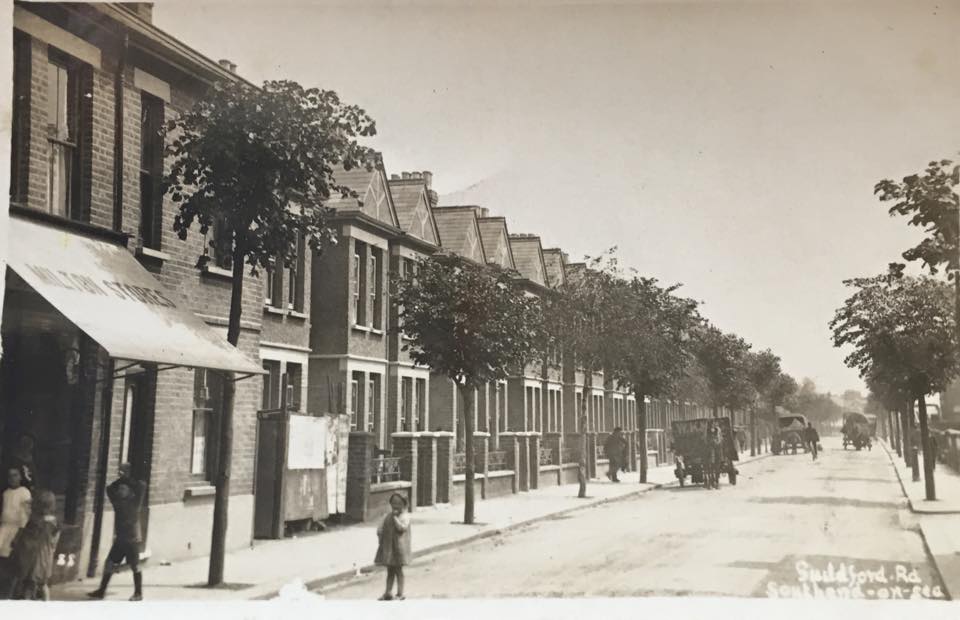
Sadly I don’t have any photos of the house at 64 Milton Street, but I did find this one of Guildford Road, where it joined the corner of Milton Street, in 1908.

The longest living of the Lewis siblings was my great-great-grandmother (and namesake), Kate Williams. On the 1939 register she is recorded as a widow, living alone in her childhood home that was once so full of life. When she died in 1958 it passed to her eldest son John Edward Lewis Williams (born a few months after the death of his uncle John Edward Lewis, and known as Jack just like his namesake). In 1966, the house, along with most of the street, was bought and demolished by the council to make way for a new road. From the 1870s to 1966, 64 Milton Street, Prittlewell, was home to at least fourteen members of my family, across three generations.

When we are lucky enough to find newspaper articles such as those above, they can enrich our understanding of the lives and social contexts of our ancestors, and bring to life the names and addresses we may find on a census.

Kitty & her Chow Chows

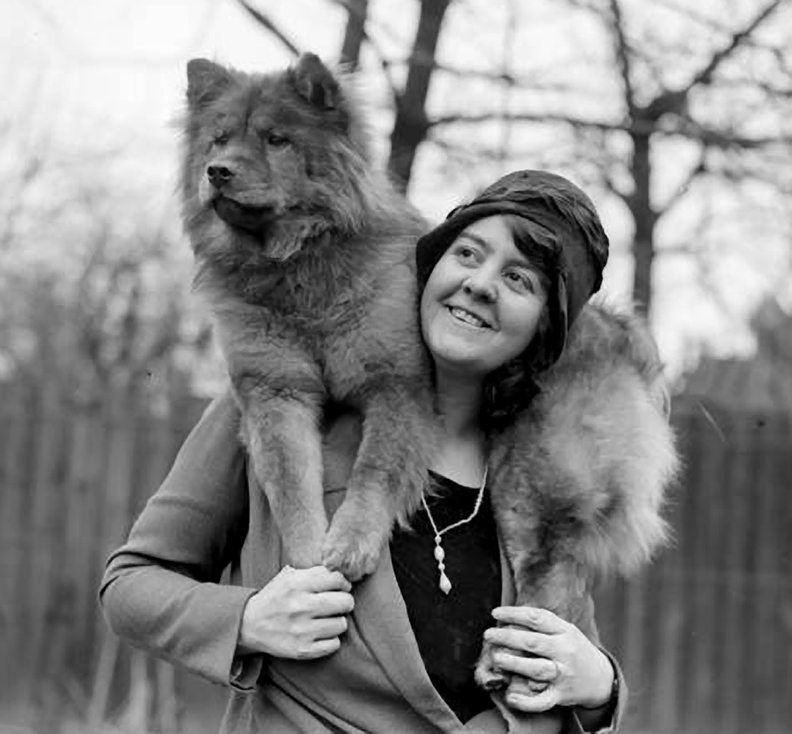
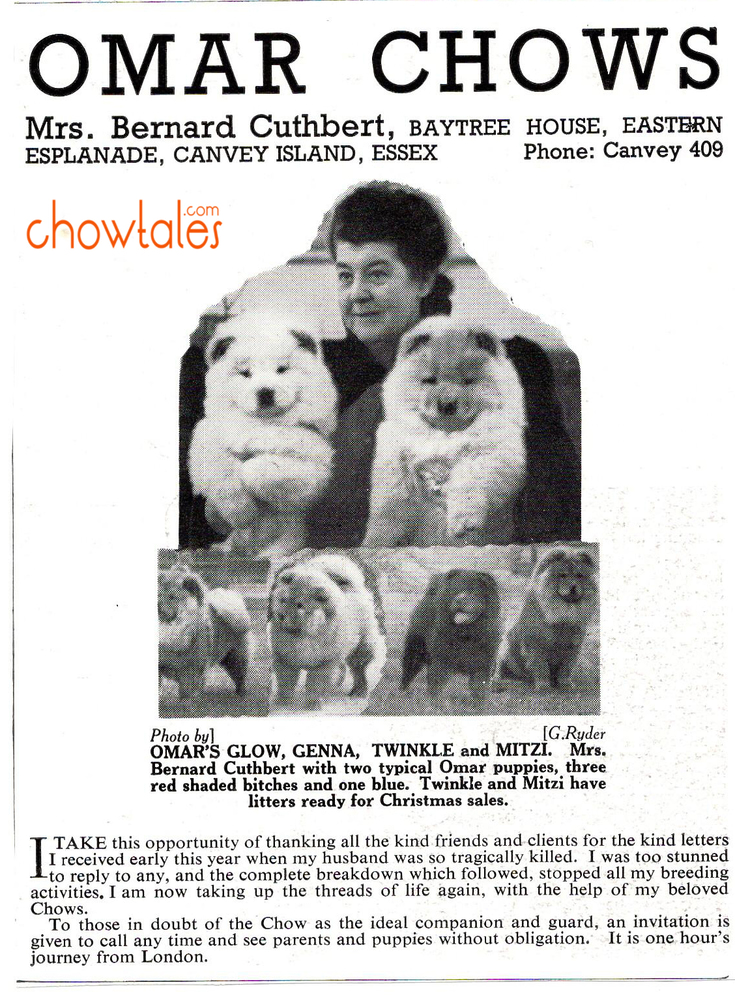
I have always been interested in my family history, particularly my great-grandmother and namesake Kitty, and before I learnt how to find censuses and official records last year, I used to occasionally google Kitty’s name to see what I could find. A few years ago I discovered that the website ChowTales.com had some wonderful pictures of her, in connection with her very successful career as a breeder of chow chows. I recently decided to share some of my family photos of Kitty, her sons and the dogs, with Sandra of ChowTales.com, to say thank you for preserving and sharing a part of my family history.

You can read the wonderful post Sandra wrote about Kitty, (who bred her dogs under her married name of Mrs Bernard Cuthbert) here. Sandra has shared some wonderful articles about Kitty which have given me a lot of insight in Kitty’s life and career, including the first article about her (that I’m aware of) from 1927. She began breeding dogs from her home in Catford, London, and when the family moved to Canvey Island in 1933, they took their business with them and continued to have great success there. I was particularly moved to see this article from Sandra’s collection:

My great-grandfather Bernard Cuthbert was killed in an accident in 1958 and his death was a great shock to Kitty. They had been married 47 years, since she was 16, and had always had a very strong and close relationship. I’m lucky enough to have in my possession many handwritten letters from him to her, which show how devoted he was to her and how much he loved her, but nothing written by Kitty herself. So to see her own words here, about the effect the death of her husband had on her, means a lot to me.

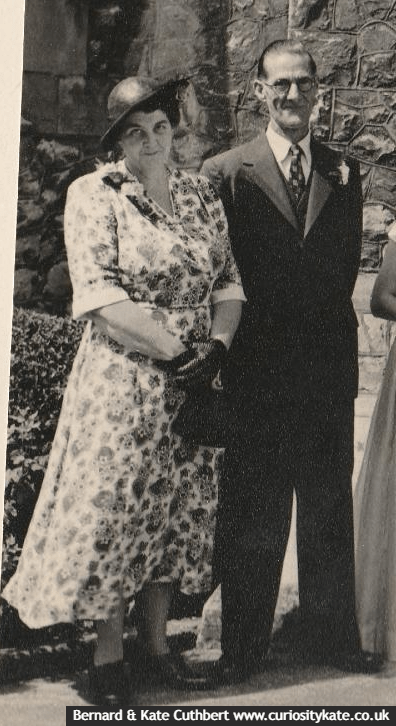
Unlike his wife, Bernard seems to have been rather camera-shy, so I don’t have many photos of him. However I do have this lovely photo of the two of them at their son Don’s wedding in the summer of 1953.

1958 was not a good year for poor Kitty. Although it was the year that her first grandchild (my mum) was born, it was also the year of several deaths: her husband, her mother, and two of her sisters-in-law with whom she had been close. I’m glad to know that as well as her loyal son and beloved grandchild, she also had her treasured dogs around her to comfort her, as well as receiving many kind of letters of support from friends and clients.

So thank you, Sandra of ChowTales.com, for providing such valuable context for my family’s history!

Kitty in the First World War

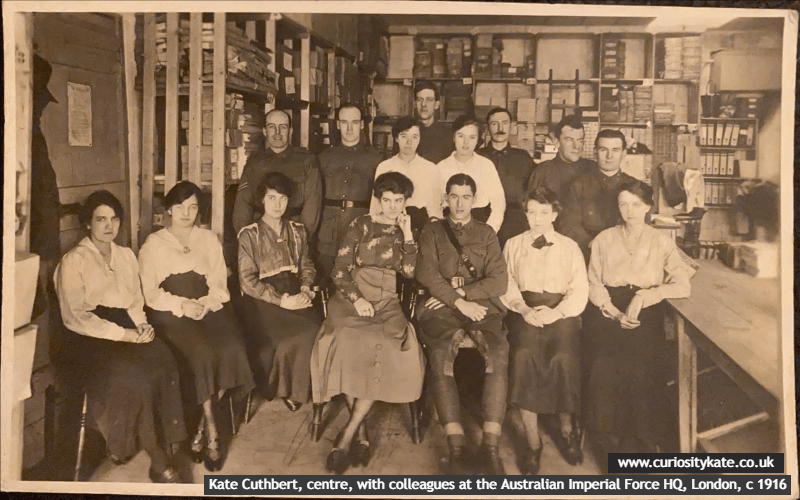
Kitty, front row centre, with colleagues in the Ordnance Section of the Australian Imperial Force Headquarters, around 1916. From my personal family archives.

My great-grandmother Kate “Kitty” Beatrice Cuthbert, née Williams, is one of the most interesting characters in my family history. A successful breeder of Chow Chows, a shop proprietor, a councillor, a defender of neglected wives and children, but before all those things, when she was 20 years old, she worked at the Australian Imperial Force headquarters in Westminster, London.

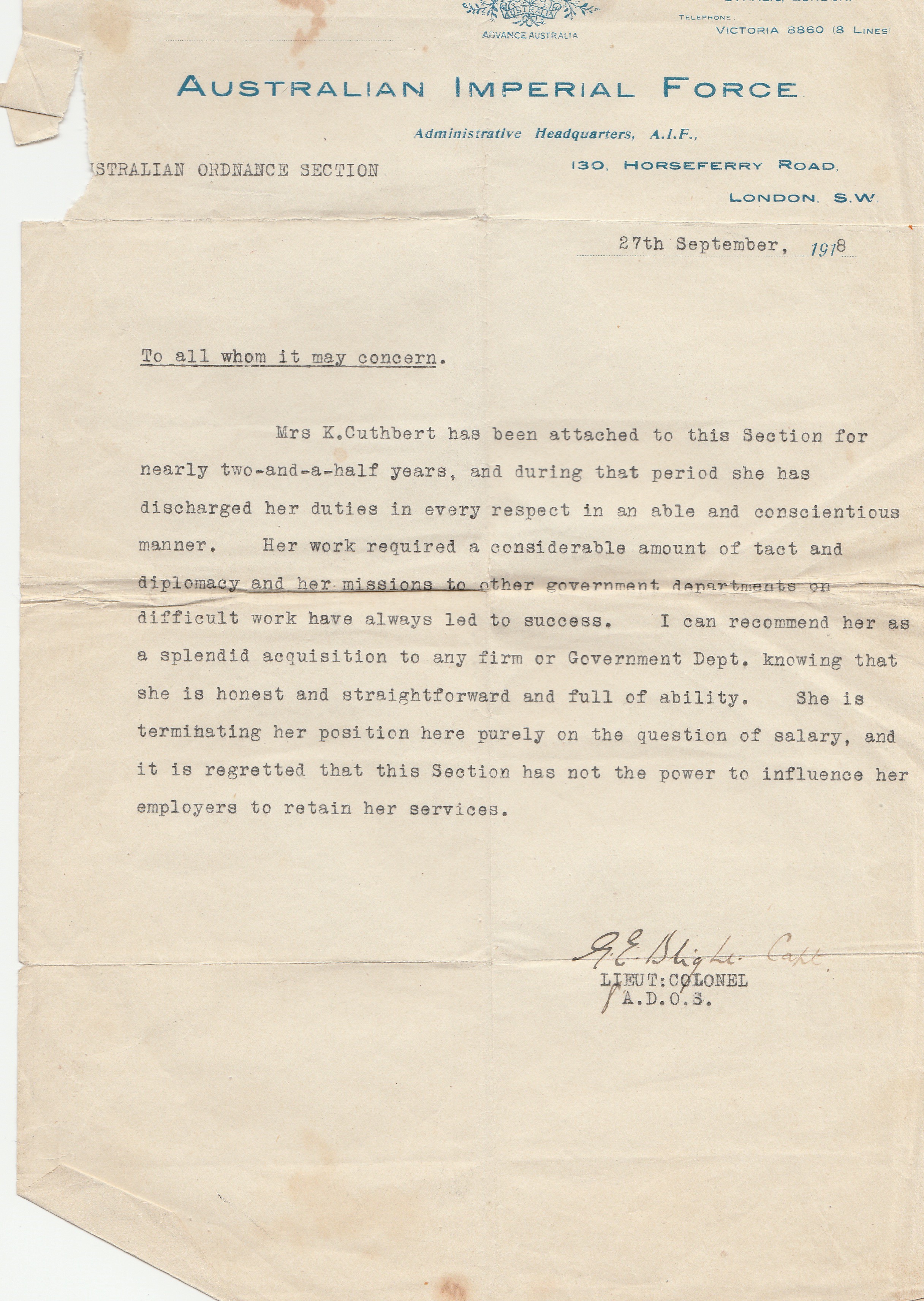
Kitty was obviously proud of this part of her life as she kept this reference letter for the rest of her life, and I found it among her old papers and photos. You can see a scan of the original document here, but here’s a transcript:

AUSTRALIAN ORDINANCE SECTION

27th September 1918

To all whom it may concern.

Mrs. K Cuthbert has been attached to this Section for nearly two-and-a-half years, and during that period she has discharged her duties in every respect in an able and conscientious manner. Her work required a considerable amount of tact and diplomacy and her missions to other government departments on difficult work have always led to success. I can recommend her as a splendid acquisition to any firm or Government Dept. knowing she is honest and straight-forward and full of ability. She is terminating her position here on the question of salary, and it is regretted that this Section has not the power to influence her employers to retain her services.

G E Blight Lt. Capt
pp LIEUT: COLONEL
A.D.O.S

In early 1916, when her service with the AIF began, Kitty was 21 years old, had been married for five years, had a three-year-old son, and had been earning a living since she was fourteen. Until the First World War, it was expected that women would give up work once they married, to focus on the unpaid domestic duties of the marital home, and with a husband bringing enough money in to take care of the family. Kitty, however, continued to work after the birth of her son, even though her husband, Bernard, didn’t enlist in the military until 1917.

One of Bernard’s letters home to Kitty suggests that her motivation to work was due to financial necessity. He writes: “[I] never thoroughly realised til now what a drawback I have been to you in so many ways. I have not even kept you for the last 2 or 3 years… I am going on for 27 and what prospects do I have when the war is over. No money, no job and one room. And the best wife in the world. I layed [sic] and cried for an hour or so to myself when I thought it.” Poor Bernard! As a self-employed painter and decorator (the family trade) in London, I imagine he was bringing some money in, especially once the war began and many younger men were enlisted. But the idea that his wife should also need to work was obviously hard for him.

Working Women in the First World War

Kitty wasn’t alone as a working wife. Women’s employment rates increased dramatically during the First World War and they were no longer limited to “women’s work” such as domestic service, but were able to take jobs in manufacturing, transportation and agricultural sectors among others. These jobs were often better paid than those in domestic service, and while some, such as factory work, were more hazardous, many women found that ironically the work was not as hard and the days not as long. In 1914, 24% of women of working age were employed; this rose to 37% by 1918, with an estimated 2 million women employed in roles traditionally taken by men. Not only that, but 40% of these working women in 1918 were married.

The government provided funding towards the costs of over 100 day nurseries across the country for the children of women who worked in munitions factories, although women employed in other sectors had to rely on their family and friends for childcare support. The General Post Office lifted their ban (which had been implemented in 1878) on employing married women. For the duration of the war at least, married women were becoming increasingly accepted into the workplace.

The Australian Imperial Force Headquarters

So, what was Kitty’s workplace like? The headquarters of the Australian Imperial Force (the main expeditionary military force of Australia) were set up in London in 1915, serving as a base for administration, finance and provisions, as well as being a “home away from home” for the 331, 781 Australian soldiers serving in France, plus 3011 members of the Australian Nursing Service. From mid-1916, for the next two years, there were never fewer than 50,000 Australian troops in Britain, excluding men on leave. If you’re interested in learning more about the experiences of the Australian soldiers, I highly recommend the article ‘London and the First World War’ by Elise Edmonds for the Imperial War Museum which features several fascinating excerpts from letters written by Australian soldiers about their time in London.

The Australian War Memorial website notes that employed in the records office here was a “large number of girls, whose labour was as effective as that of the soldiers, and much cheaper.” This ties in with the implication in Kitty’s reference letter that she was dissatisfied with her pay and is consistent with the fact that women were vastly under-paid at this time. They may have been paid more than they would have been in domestic service, but in almost all sectors they were being paid less than a man would be in the same job. While Kitty clearly excelled in her role and impressed her supervisors, it seems she was not prepared to be paid less than she knew she deserved, and the AIF were not prepared to increase her pay when there were so many women out there in need of work.

After the War

As the war ended, many people felt society should re-establish traditional gender roles. Many women had been employed on the understanding that their contract would last only for duration of the war. The Restoration of Pre-War Practices Act 1919 required returning soldiers to be given their pre-war jobs back, and 750,000 women were made redundant in 1918. While the Sex Disqualification (Removal) Act 1919 made it illegal to prevent women from joining professions and vocations and be awarded degrees based on their gender or marital status, the law was broad and seldom invoked, and commercial companies were not generally prevented from adopting unofficial bans on employing married women. Even the General Post Office was able to reinstate their ‘marriage bar’ upon the end of the War, and it was not permanently lifted until well after the Second World War.

Many men blamed women for the rising levels of unemployment, and even among women there was resentment and rivalry. One woman, Isobel M Pazzey of Woolwich, felt so strongly about the subject of married women in the workplace that she wrote to the Daily Herald in October 1919, stating that “No decent man would allow his wife to work, and no decent woman would do it if she knew the harm she was doing to the widows and single girls who are looking for work. Put the married women out, send them home to clean their houses and look after the man they married and give a mother’s care to their children. Give the single women and widows the work.” This was typical of the prevailing opinion of the time so it’s no wonder Bernard felt it a personal failing on his part that his wife should have to work.

Personally, with what I know of Kitty’s life and personality, I don’t think she resented working. She was tenacious and confident, and probably found her role at the Australian Imperial Force Headquarters rewarding and challenging. She went on to run her own business (more than one, in fact), and serve on a district council, and it doesn’t seem as though she could have been content living the life of a housewife. In a time where society was trying to cling onto outdated gender roles and expectation, Kitty and many other women, were driving it forward.

‘Reaping Extraordinary’

In the newspaper archives (which, by the way, I access via Find My Past), you can find a lot of very tragic and/or unpleasant stories, and this is usually all I find (if anything) when researching my London and Essex ancestors. However, searching for my Cornish and Devon ancestors has resulted in a few happy, and even quite sweet little articles. Here’s one I found last night, which I have to say is probably the most wholesome item I’ve ever come across in the newspaper archives:

REAPING EXTRAORDINARY

On Monday last, August 9th, in a field belonging to Mr. John Strout, of Polyphant, Lewannick, five labourers of the parish of South-Petherwin, and an equal number from the parish of Altarnun, agreed to cut a portion of a field of wheat, about a quarter of an acre each, bind it in shocks in a proper and workmanlike manner; to be done in the short space of four hours for a wager of £5.

The work was done so well by the competing parties that the umpires, Mr. Somer of St. Cleather, and Mr. W Dawe of Lewannick, had considerable difficulty in deciding. But as both parties were a few minutes over the time, and equally deserving, they thought it best that the bet should be withdrawn.

Hundreds of people were present to witness the performance, which excited a great deal of interest, and appeared highly pleased with the able manner in which the work was done. Under the circumstances the decision of the umpires deserved the greatest praise.

The utmost harmony prevailed throughout the contest.

(Cornish Times 14 August 1858 © The British Library Board. All Rights Reserved. Accessed via Find My Past.)

By the way, John Strout was my 4x great grandfather. This particular article doesn’t provide any facts about my family history but it provides the kind of context that I love to help build up a picture of what the life of my ancestors was like.

Have you found any particularly wholesome newspaper items? Is there any geographical area you’ve found is particularly good for this kind of content?

The beginning

I don’t know why it took me so long to actually start researching my family history. It’s a topic that always interested me, and every now and then I’d google the names of my great-grandparents, but aside from a couple of photos of my great-grandmother, I never found anything. I knew my grandad had been researching our family history in the 1990s, and I knew his papers would still be around somewhere, but it never really occurred to me to look at them.
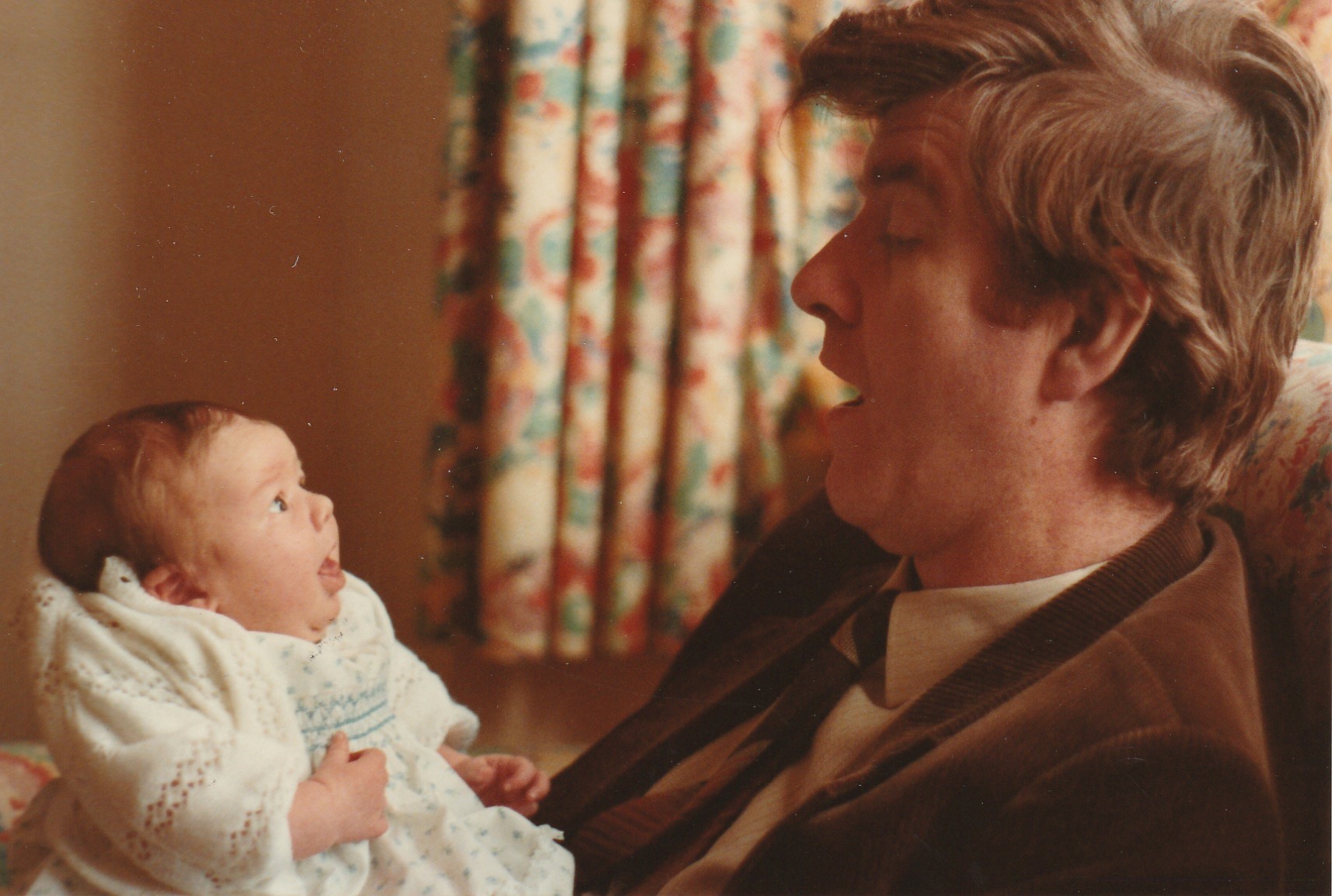
During the first lockdown last year, I googled my great-grandmother again and this time Ancestry came up. I signed up for a free trial and found all kinds of information I never realised was so easy to access. I naively resolved to find out “everything” before the end of my two week trial… and now nine months later I’m still learning more about my family history everyday, not just on Ancestry but on other sites too.

When I told my mum I was researching our family history, she gave me my grandad’s notebook and papers. There were birth, marriage and death certificates, copied out census records, printouts of microfiche, pages of scribbled notes. He had filled out a pedigree chart of course, but to my surprise he’d even done one for me. I was a young child at the time and he never showed it to me, but it was like he knew I would need it someday.

Going through all my grandad’s notes and knowing I’m carrying on his research makes the whole process of researching my family history even more personal and rewarding. Back when he was doing this, he didn’t have the internet to help him. He had to visit or write to record offices for information. I have the benefit of online indexed transcriptions from all over the world, which makes things easier in a lot of ways but a little overwhelming in others. Whenever I find more evidence to back up what he already found, or something that confirms a hunch of his, or something that eluded him, I feel so proud, and I know he’d be proud of me. I wish I could talk to him about it all and show him what I’ve found and tackle those stubborn brick walls together.